Details
This is the Wolfram Language counterpart of KS2sample and KS2sample_Rcpp in the R package
KSgeneral (Dimitrova, Jia, Kaishev 2026).
Unlike the R version, which uses floating-point arithmetic and requires a tolerance parameter, the Wolfram Language implementation is designed for exact arithmetic throughout and returns an exact rational p-value.
KS2Sample[data1,data2, …] tests the null hypothesis H0: F(x) = G(x) for all x, where F and G are the unknown underlying CDFs of data1 and data2 respectively. Both samples may come from continuous, discrete, or mixed distributions and may contain repeated observations (ties).
The two-sample KS statistics are

(two-sided),

(one-sided greater), and

(one-sided less), where
Fm(t),
Gn(t) and
Em+n(t) are the empirical CDF of the
data1,
data2 and the pooled sample
Zm+n={
data1,
data2} respectively and
W is the weight function.
The option "Alternative" controls the direction of the test. "TwoSided" (default) uses
Δm,n; "Greater" uses
Δm,n+ to test
H1: F(x) > G(x); "Less" uses
Δm,n- to test
H1: F(x) < G(x).
weight=Function[t,1/Sqrt[t(2-t)]]The option
"Weight" controls the weight function W.
"Weight"→ 0 (default) gives the standard unweighted KS test (
W(t)=1).
"Weight"→ν, for
ν ∈ (0, 1], gives the parametric family
W(t) = 1/[t(1−t)])ν due to Finner and Gontscharuk (2018);
ν = 0.5 recovers the Anderson-Darling weight of Canner (1975). A user-supplied function enables arbitrary weights, e.g. “Weight”
→ Function[t,1/Sqrt[t(2-t)]] for the Büning (2001) weight suited to left-skewed heavy-tailed data.
The data-interface form ResourceFunction["KS2Sample"][data1, data2, …] returns the list {d,p} where d is the observed KS statistic and p is the exact rational p-value. The low-level form ResourceFunction["KS2Sample"][m,n,multiplicity,q] returns only the p-value as an exact rational number.
In the low-level form,
multiplicity is an integer list of length k (the number of distinct values in the pooled sample) where
multiplicity[[i]] is the number of times the i-th distinct pooled-sample value appears.
Total[multiplicity] must equal
m+n. When there are no ties,
multiplicity=ConstantArray[1,m+n]. The weight function is specified via the
"Weight" option. It is evaluated at
i/(m+n) for
i = 1, …, m+n-1 internally.
The p-value is the exact conditional probability P(Dm,n≥q|Zm+n), where Dm,n is permutation version of the selected KS statistic (Δm,n, Δm,n+ or Δm,n-) obtained by randomly repartitioning the pooled sample Zm+n into two groups of sizes m and n. By Theorem 2.1 of Dimitrova, Jia, Kaishev (2026), this permutation p-value is asymptotically consistent with the unconditional p-value for arbitrary underlying distributions F and G.
The algorithm implements the recurrence Bs(i,j)=1s(i,j)[Bs(i-1,j)+Bs(i,j-1)] on the integer grid R = {(i,j): 0 ≤ i ≤ m, 0 ≤ j ≤ n}, where S is the region defined by d(i,j)< q. It runs in O(m n) time, processes one anti-diagonal per iteration, and uses vectorised slice assignment for the inner update. All arithmetic is exact; no floating-point tolerance is required.
![SeedRandom[1];
data1 = RandomVariate[ExponentialDistribution[1], 20];
data2 = RandomVariate[ExponentialDistribution[1], 25];
ResourceFunction["KS2Sample"][data1, data2]](https://www.wolframcloud.com/obj/resourcesystem/images/a7a/a7af78e4-b7a3-4c3f-bf68-666ca21c53e9/2a3f7029db478e55.png)

![ResourceFunction["KS2Sample"][5, 6, 3/10]](https://www.wolframcloud.com/obj/resourcesystem/images/a7a/a7af78e4-b7a3-4c3f-bf68-666ca21c53e9/24dd89161ad52c03.png)

![ResourceFunction["KS2Sample"][5, 6, 3/10, "Alternative" -> "Greater"]](https://www.wolframcloud.com/obj/resourcesystem/images/a7a/a7af78e4-b7a3-4c3f-bf68-666ca21c53e9/21b89af63f1a9bad.png)

![ResourceFunction["KS2Sample"][120, 150, {80, 70, 40, 80}, 1/10]](https://www.wolframcloud.com/obj/resourcesystem/images/a7a/a7af78e4-b7a3-4c3f-bf68-666ca21c53e9/43e4d6ed832fa4a2.png)

![SeedRandom[1];
data1 = RandomVariate[ExponentialDistribution[1], 20];
data2 = RandomVariate[ExponentialDistribution[1], 25];
ResourceFunction["KS2Sample"][data1, data2, "Alternative" -> "Greater"]](https://www.wolframcloud.com/obj/resourcesystem/images/a7a/a7af78e4-b7a3-4c3f-bf68-666ca21c53e9/41a917bcc656c80c.png)

![SeedRandom[2];
data3 = RandomVariate[PoissonDistribution[2], 30];
data4 = RandomVariate[PoissonDistribution[3], 40];
ResourceFunction["KS2Sample"][data3, data4]](https://www.wolframcloud.com/obj/resourcesystem/images/a7a/a7af78e4-b7a3-4c3f-bf68-666ca21c53e9/575e2e90ebf43e80.png)

![SeedRandom[1];
data1 = RandomVariate[ExponentialDistribution[1], 20];
data2 = RandomVariate[ExponentialDistribution[1], 25];
ResourceFunction["KS2Sample"][data1, data2, "Weight" -> 1/2]](https://www.wolframcloud.com/obj/resourcesystem/images/a7a/a7af78e4-b7a3-4c3f-bf68-666ca21c53e9/323a0d2a7bd556ac.png)

![ResourceFunction["KS2Sample"][data1, data2, "Weight" -> Function[t, 1/Sqrt[t (2 - t)]]]](https://www.wolframcloud.com/obj/resourcesystem/images/a7a/a7af78e4-b7a3-4c3f-bf68-666ca21c53e9/6aa78a7a15bde94c.png)

![ResourceFunction["KS2Sample"][10, 12, ConstantArray[1, 22], 0.8, "Weight" -> 1/2]](https://www.wolframcloud.com/obj/resourcesystem/images/a7a/a7af78e4-b7a3-4c3f-bf68-666ca21c53e9/2cc7e2d7bfd1ec02.png)

![pexact = ResourceFunction["KS2Sample"][120, 150, {80, 70, 40, 80}, 1/10]](https://www.wolframcloud.com/obj/resourcesystem/images/a7a/a7af78e4-b7a3-4c3f-bf68-666ca21c53e9/77bf8f1ff166e248.png)

![N[pexact, 50]](https://www.wolframcloud.com/obj/resourcesystem/images/a7a/a7af78e4-b7a3-4c3f-bf68-666ca21c53e9/4878d9eaea82682b.png)

![pexact2 = ResourceFunction["KS2Sample"][120, 150, {80, 70, 40, 80}, 1/12, "Alternative" -> "Greater"]; N[pexact2, 50]](https://www.wolframcloud.com/obj/resourcesystem/images/a7a/a7af78e4-b7a3-4c3f-bf68-666ca21c53e9/385cbce2a20a10e8.png)

![pexact3 = ResourceFunction["KS2Sample"][120, 150, {80, 70, 40, 80}, 1/10, "Alternative" -> "Less"]; N[pexact3, 50]](https://www.wolframcloud.com/obj/resourcesystem/images/a7a/a7af78e4-b7a3-4c3f-bf68-666ca21c53e9/765491a74c0a1eaa.png)

![x = {1, 2, 3, 4, 5};
ResourceFunction["KS2Sample"][x, x]](https://www.wolframcloud.com/obj/resourcesystem/images/a7a/a7af78e4-b7a3-4c3f-bf68-666ca21c53e9/3cbc668211b5655c.png)

![SeedRandom[3];
d1 = RandomVariate[UniformDistribution[], 50000];
d2 = RandomVariate[UniformDistribution[], 50000];
AbsoluteTiming[ResourceFunction["KS2Sample"][d1, d2];]](https://www.wolframcloud.com/obj/resourcesystem/images/a7a/a7af78e4-b7a3-4c3f-bf68-666ca21c53e9/4539c586a03b82c3.png)
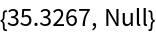
![titanic = Normal@ExampleData[{"Dataset", "Titanic"}];
survived = #["age"] & /@ Select[titanic, #["survived"] === True && NumberQ[#["age"]] &];
notsurvived = #["age"] & /@ Select[titanic, #["survived"] === False && NumberQ[#["age"]] &];
{Length[survived], Length[notsurvived]}](https://www.wolframcloud.com/obj/resourcesystem/images/a7a/a7af78e4-b7a3-4c3f-bf68-666ca21c53e9/3690a38ff5f4905c.png)

![SortBy[Tally[Join[survived, notsurvived]], -Last[#] &][[1 ;; 10]]](https://www.wolframcloud.com/obj/resourcesystem/images/a7a/a7af78e4-b7a3-4c3f-bf68-666ca21c53e9/0fc40bb6e806e70a.png)

![{dstat, pval} = ResourceFunction["KS2Sample"][survived, notsurvived]](https://www.wolframcloud.com/obj/resourcesystem/images/a7a/a7af78e4-b7a3-4c3f-bf68-666ca21c53e9/6c5ebc586ae8087a.png)

![N[pval, 30]](https://www.wolframcloud.com/obj/resourcesystem/images/a7a/a7af78e4-b7a3-4c3f-bf68-666ca21c53e9/3eae3311ff6e3af1.png)

![{dstatAD, pvalAD} = ResourceFunction["KS2Sample"][survived, notsurvived, "Weight" -> 1/2];
N[pvalAD, 30]](https://www.wolframcloud.com/obj/resourcesystem/images/a7a/a7af78e4-b7a3-4c3f-bf68-666ca21c53e9/2b27ce5f286ae93f.png)
