Wolfram Function Repository
Instant-use add-on functions for the Wolfram Language
Function Repository Resource:
Generate a round-robin tournament graph
ResourceFunction["TournamentGraph"][n] generates a balanced directed tournament on n vertices in which each vertex has nearly the same number of outgoing and incoming edges. | |
ResourceFunction["TournamentGraph"][n,"Cyclic"] generates a balanced directed tournament on n vertices in which each vertex has nearly the same number of outgoing and incoming edges. | |
ResourceFunction["TournamentGraph"][n,"Acyclic"] generates an acyclic directed tournament of n vertices by assigning a direction to each edge according to the vertex list order, so that the edge is directed as u→v if u precedes v in the vertex list, andv→u otherwise. | |
ResourceFunction["TournamentGraph"][n,"Random"] generates a random directed tournament of n vertices by assigning a random direction to each edge. |
Generate a tournament graph of 7 vertices. If no type is specified, it returns a cyclic graph:
| In[1]:= | ![ResourceFunction["TournamentGraph"][7]](https://www.wolframcloud.com/obj/resourcesystem/images/a87/a87030df-a48f-42c3-9ae6-5d79b49337b3/0189748eca8cc6be.png) |
| Out[1]= | 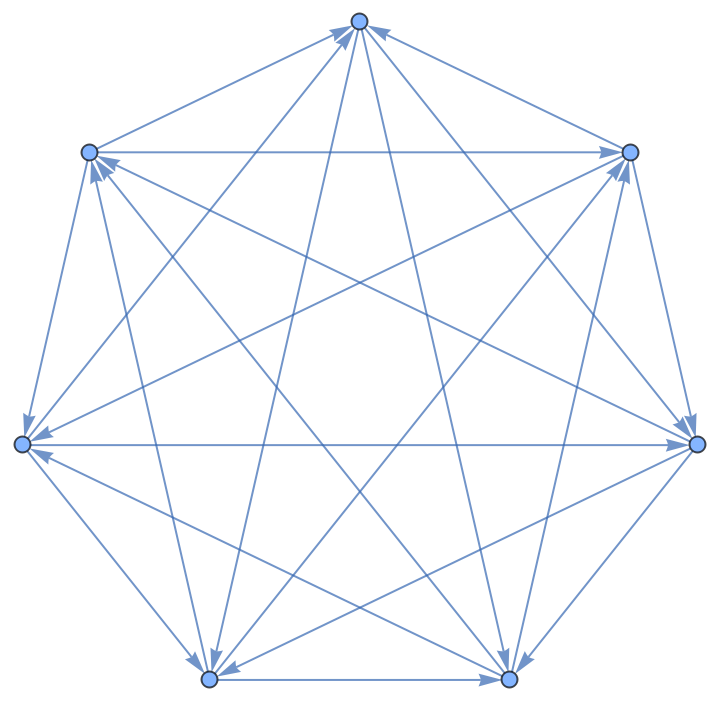 |
Generate a cyclic tournament graph of 7 vertices:
| In[2]:= | ![ResourceFunction["TournamentGraph"][7, "Cyclic"]](https://www.wolframcloud.com/obj/resourcesystem/images/a87/a87030df-a48f-42c3-9ae6-5d79b49337b3/4d7d7d46b6a03028.png) |
| Out[2]= | 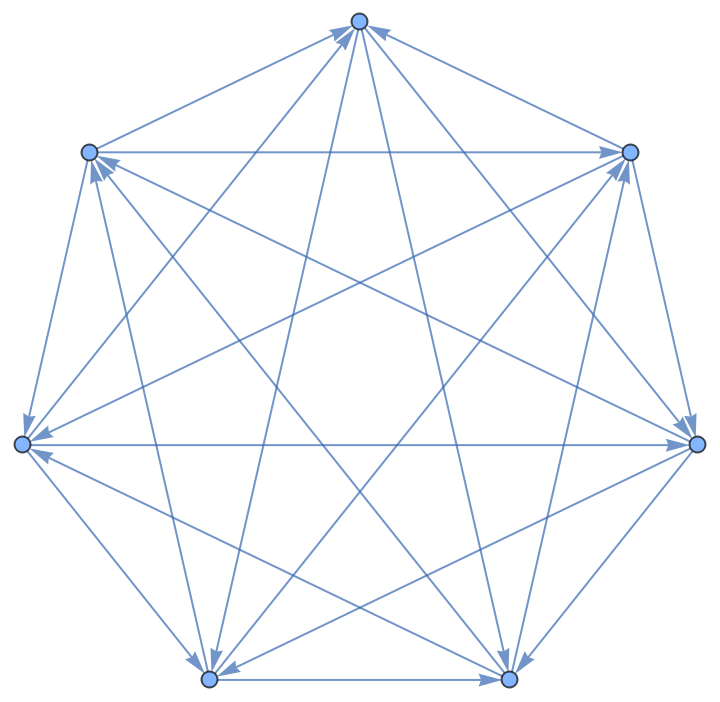 |
Generate an acyclic tournament graph of 7 vertices:
| In[3]:= | ![ResourceFunction["TournamentGraph"][7, "Acyclic"]](https://www.wolframcloud.com/obj/resourcesystem/images/a87/a87030df-a48f-42c3-9ae6-5d79b49337b3/06830b09c24c306b.png) |
| Out[3]= | 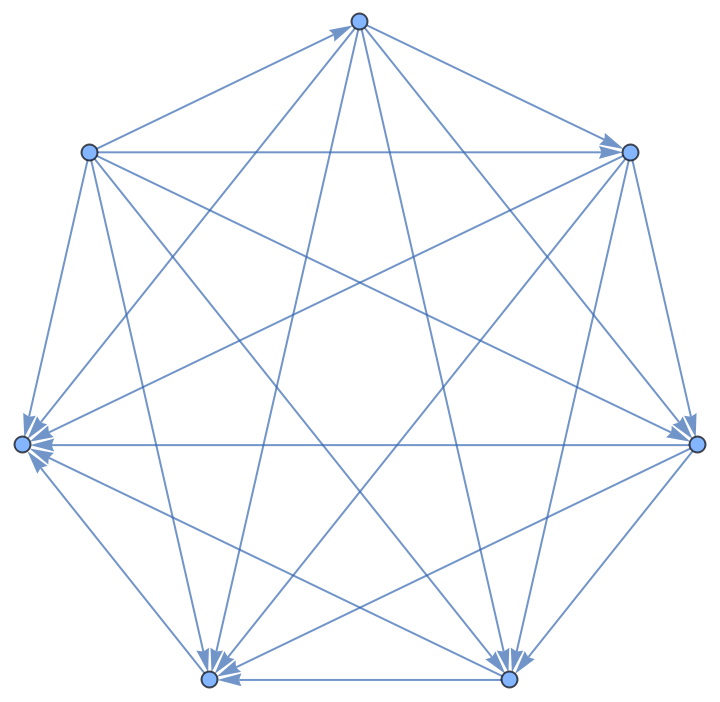 |
Generate a random tournament graph of 7 vertices:
| In[4]:= | ![ResourceFunction["TournamentGraph"][7, "Random"]](https://www.wolframcloud.com/obj/resourcesystem/images/a87/a87030df-a48f-42c3-9ae6-5d79b49337b3/53df1652fe79b917.png) |
| Out[4]= | 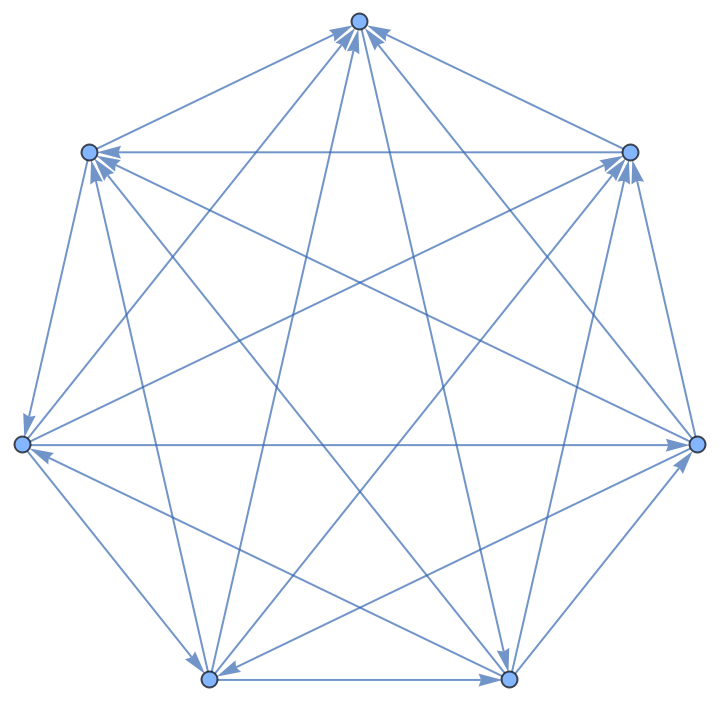 |
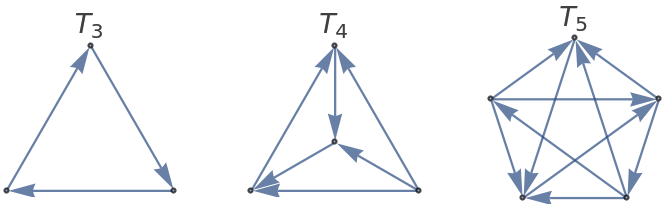
Generate the first "Cyclic" tournaments:
| In[5]:= | ![Table[ResourceFunction["TournamentGraph"][i, "Cyclic", PlotLabel -> Subscript[T, i], ImageSize -> 80, GraphLayout -> "SpringElectricalEmbedding"], {i, 3, 5}]](https://www.wolframcloud.com/obj/resourcesystem/images/a87/a87030df-a48f-42c3-9ae6-5d79b49337b3/4d00d37f7adbf1f9.png) |
| Out[5]= | 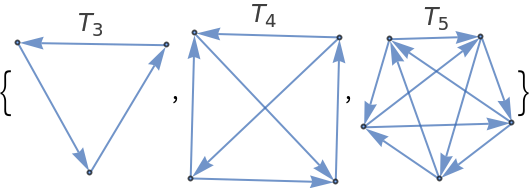 |
Generate the first "Acyclic" tournaments:
| In[6]:= | ![Table[ResourceFunction["TournamentGraph"][i, "Acyclic", PlotLabel -> Subscript[T, i], ImageSize -> 80, GraphLayout -> "SpringElectricalEmbedding"], {i, 3, 5}]](https://www.wolframcloud.com/obj/resourcesystem/images/a87/a87030df-a48f-42c3-9ae6-5d79b49337b3/11ae06a2d6e2d338.png) |
| Out[6]= | 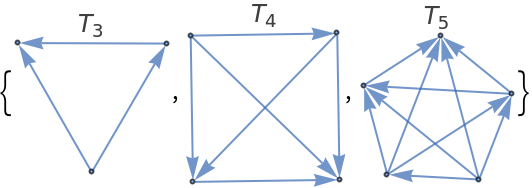 |
Generate "Random" tournaments:
| In[7]:= | ![Table[ResourceFunction["TournamentGraph"][i, "Random", PlotLabel -> Subscript[T, i], ImageSize -> 80, GraphLayout -> "SpringElectricalEmbedding"], {i, 3, 5}]](https://www.wolframcloud.com/obj/resourcesystem/images/a87/a87030df-a48f-42c3-9ae6-5d79b49337b3/7577740ef1586367.png) |
| Out[7]= | 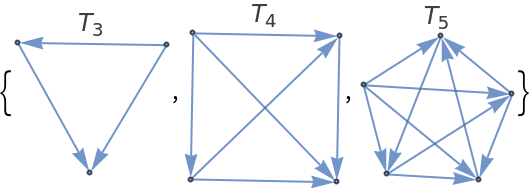 |
Specify an annotation for vertices:
| In[8]:= | ![ResourceFunction["TournamentGraph"][5, AnnotationRules -> {1 -> {VertexLabels -> "hello"}}]](https://www.wolframcloud.com/obj/resourcesystem/images/a87/a87030df-a48f-42c3-9ae6-5d79b49337b3/6424cae739fe342e.png) |
| Out[8]= | 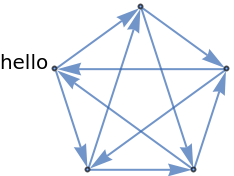 |
Specify an annotation for edges:
| In[9]:= | ![ResourceFunction["TournamentGraph"][5, AnnotationRules -> {1 \[DirectedEdge] 2 -> {EdgeLabels -> "hello"}}]](https://www.wolframcloud.com/obj/resourcesystem/images/a87/a87030df-a48f-42c3-9ae6-5d79b49337b3/16b37d69df9d0628.png) |
| Out[9]= | 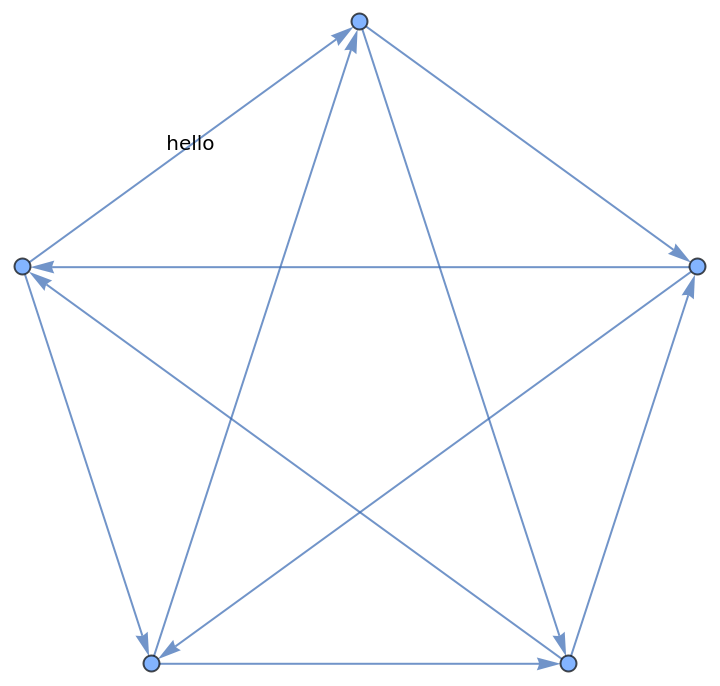 |
Highlight the vertex 1:
| In[10]:= | ![ResourceFunction["TournamentGraph"][5, GraphHighlight -> {1}]](https://www.wolframcloud.com/obj/resourcesystem/images/a87/a87030df-a48f-42c3-9ae6-5d79b49337b3/0c1aaef95ff59e2f.png) |
| Out[10]= | 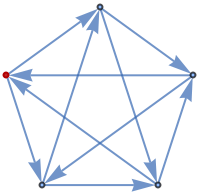 |
Highlight the edge 23:
| In[11]:= | ![ResourceFunction["TournamentGraph"][5, GraphHighlight -> {2 \[DirectedEdge] 3}]](https://www.wolframcloud.com/obj/resourcesystem/images/a87/a87030df-a48f-42c3-9ae6-5d79b49337b3/4eae3167ab1cbaf6.png) |
| Out[11]= | 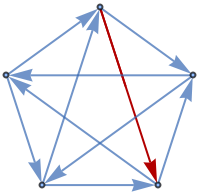 |
Highlight both vertices and edges:
| In[12]:= | ![ResourceFunction["TournamentGraph"][5, GraphHighlight -> {1, 2, 2 \[DirectedEdge] 3}]](https://www.wolframcloud.com/obj/resourcesystem/images/a87/a87030df-a48f-42c3-9ae6-5d79b49337b3/7b55bed5f7c514a2.png) |
| Out[12]= | 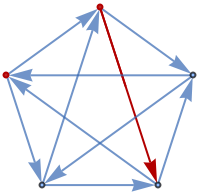 |
Use a common base theme:
| In[13]:= | ![ResourceFunction["TournamentGraph"][5, PlotTheme -> "Business"]](https://www.wolframcloud.com/obj/resourcesystem/images/a87/a87030df-a48f-42c3-9ae6-5d79b49337b3/4e951e00021c581c.png) |
| Out[13]= | 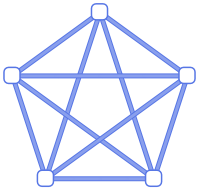 |
Use a monochrome theme:
| In[14]:= | ![ResourceFunction["TournamentGraph"][5, PlotTheme -> "Monochrome"]](https://www.wolframcloud.com/obj/resourcesystem/images/a87/a87030df-a48f-42c3-9ae6-5d79b49337b3/0d349e8fe183e7db.png) |
| Out[14]= | 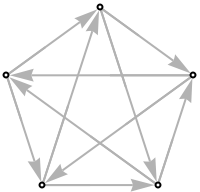 |
By default, the size of vertices is computed automatically:
| In[15]:= | ![ResourceFunction["TournamentGraph"][5, VertexSize -> Automatic]](https://www.wolframcloud.com/obj/resourcesystem/images/a87/a87030df-a48f-42c3-9ae6-5d79b49337b3/40b726f5bbbe155c.png) |
| Out[15]= | 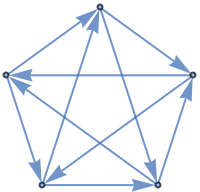 |
Specify the size of all vertices using symbolic vertex size:
| In[16]:= | ![Table[ResourceFunction["TournamentGraph"][5, VertexSize -> s, PlotLabel -> s], {s, {Tiny, Small, Medium, Large}}]](https://www.wolframcloud.com/obj/resourcesystem/images/a87/a87030df-a48f-42c3-9ae6-5d79b49337b3/31d69840fd7d64d6.png) |
| Out[16]= | 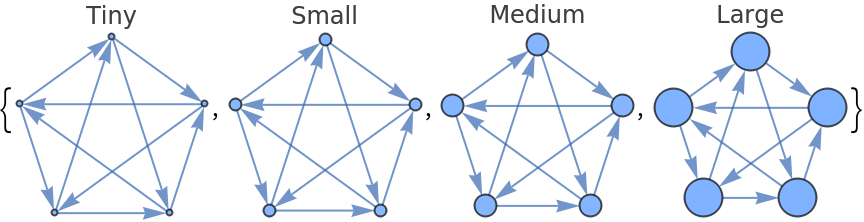 |
Specify the size for individual vertices:
| In[17]:= | ![ResourceFunction["TournamentGraph"][5, VertexSize -> {1 -> 0.2, 2 -> 0.3}]](https://www.wolframcloud.com/obj/resourcesystem/images/a87/a87030df-a48f-42c3-9ae6-5d79b49337b3/5a936559f159695d.png) |
| Out[17]= | 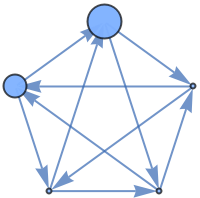 |
Style all vertices:
| In[18]:= | ![Table[ResourceFunction["TournamentGraph"][5, VertexStyle -> style, VertexSize -> 0.3, PlotLabel -> ToString[style], ImageSize -> Tiny], {style, {Yellow, EdgeForm[Dashed]}}]](https://www.wolframcloud.com/obj/resourcesystem/images/a87/a87030df-a48f-42c3-9ae6-5d79b49337b3/67cd0650ddb6afa5.png) |
| Out[18]= | 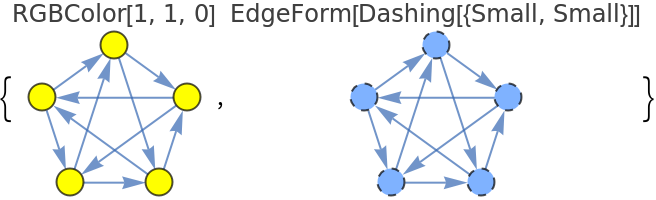 |
Style individual vertices:
| In[19]:= | ![ResourceFunction["TournamentGraph"][5, VertexStyle -> {1 -> Blue, 2 -> Red}, VertexSize -> 0.2]](https://www.wolframcloud.com/obj/resourcesystem/images/a87/a87030df-a48f-42c3-9ae6-5d79b49337b3/7543d4bab2c4cf68.png) |
| Out[19]= | 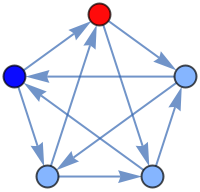 |
The default GraphLayout is "CircularEmbedding":
| In[20]:= | ![ResourceFunction["TournamentGraph"][7]](https://www.wolframcloud.com/obj/resourcesystem/images/a87/a87030df-a48f-42c3-9ae6-5d79b49337b3/347ec16d048a21c2.png) |
| Out[20]= | 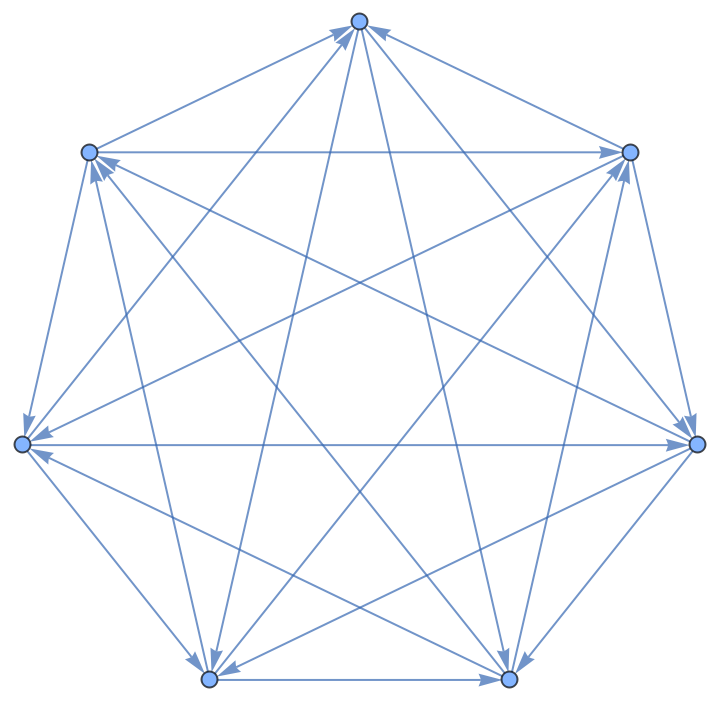 |
Specify any layout:
| In[21]:= | ![ResourceFunction["TournamentGraph"][7, GraphLayout -> "LayeredEmbedding"]](https://www.wolframcloud.com/obj/resourcesystem/images/a87/a87030df-a48f-42c3-9ae6-5d79b49337b3/7b9c3e1458d98265.png) |
| Out[21]= | 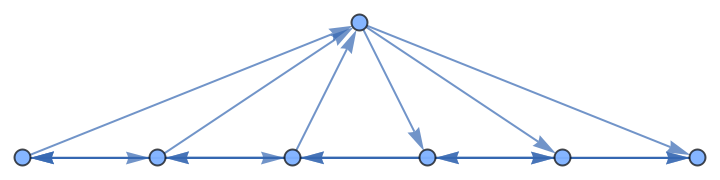 |
The number of vertices of TournamentGraph [n] is n:
| In[22]:= | ![n = 5;
VertexCount@ResourceFunction["TournamentGraph"][5] == n](https://www.wolframcloud.com/obj/resourcesystem/images/a87/a87030df-a48f-42c3-9ae6-5d79b49337b3/41a237067af0263a.png) |
| Out[5]= |  |
Number of edges of TournamentGraph [n] is 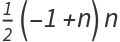 :
:
| In[23]:= | ![n = 5;
EdgeCount@ResourceFunction["TournamentGraph"][n] == (-1 + n)*n/2](https://www.wolframcloud.com/obj/resourcesystem/images/a87/a87030df-a48f-42c3-9ae6-5d79b49337b3/78b3539606406897.png) |
| Out[5]= |  |
Wolfram Language 13.0 (December 2021) or above
This work is licensed under a Creative Commons Attribution 4.0 International License