Basic Examples (3)
Expand a simple quadratic polynomial:
Expand a simple rational function:
Use the equivalent two arguments form:
Scope (5)
Complex-conjugate factorization of a real quadratic:
Verify that the expansion correctly represents the original function in the real line:
Branch-corrected expansion near a real root:
On the principal branch, when x>2 the factor 1-x/2 is negative real. PowerAffineExpand automatically inserts a compensating piecewise constant term -2π ⅈ/3 so the result is exactly equal to the original input on the principal branch. A similar branch correction for a simple rational function:
For a rational input, the expansion keeps the numerator's affine factors in the numerator and the denominator's as inverse powers, with necessary piecewise branch/sign corrections:
Verify that the result is correct:
Root objects may appear in the result:
Use ToRadicals to express using radicals:
Root objects in the expansion of a rational function:
Properties and Relations (3)
PowerExpand applies identities like Power(a b, n)=Power(a, n)*Power(b, n) under generic assumptions and without managing branches, so it may stop at non-affine factors and either omit necessary 2π ⅈ corrections or emit complex corrections:
PowerAffineExpand always expands into affine factors and simplified 2π ⅈ corrections:
Similarly for rational expressions:
Possible Issues (2)
For PowerAffineExpand to work all constants appearing in the expression should be real and numeric. It won't work for symbolic or complex parameters:
PowerAffineExpand gives an expansion which is guaranteed to be correct for real x only, and may not be valid for complex x:
Neat Examples (4)
Expansion of a high degree polynomial:
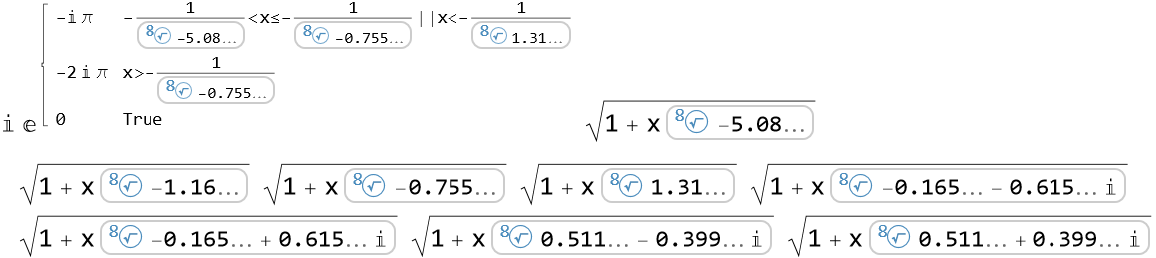
Build a polynomial with six factors. PowerAffineExpand reduces its power to an expression with one affine power per factor, inserting a piecewise 2π ⅈ term for principal-branch correctness:
For real quadratics with negative discriminant, the bases of the two affine-power terms are complex conjugates. Their imaginary parts cancel for real x, so the result is purely real with no branch correction needed:
On rationals like (x^2-1)/(x-1)=1+x, the expansion cancels the common factor and reduces to  (up to the usual constant/branch bookkeeping):
![ResourceFunction["PowerAffineExpand"][(1 - x^2), 1/2, x]](https://www.wolframcloud.com/obj/resourcesystem/images/810/810e59c4-98c8-4104-930c-5992aec79e9c/6700bd8b3d405794.png)

![ResourceFunction["PowerAffineExpand"][((1 - x)/(1 + x)), 1/3, x]](https://www.wolframcloud.com/obj/resourcesystem/images/810/810e59c4-98c8-4104-930c-5992aec79e9c/7c468eda0f080a28.png)

![ResourceFunction["PowerAffineExpand"][((1 - x)/(1 + x))^(1/3), x]](https://www.wolframcloud.com/obj/resourcesystem/images/810/810e59c4-98c8-4104-930c-5992aec79e9c/11687a9587ad2f61.png)

![res = ResourceFunction["PowerAffineExpand"][(x^2 + x + 1), 3/4, x]](https://www.wolframcloud.com/obj/resourcesystem/images/810/810e59c4-98c8-4104-930c-5992aec79e9c/75e6ac19828ce8fd.png)

![Chop@N@Table[(x^2 + x + 1)^(3/4) - res, {x, -100, 100}]](https://www.wolframcloud.com/obj/resourcesystem/images/810/810e59c4-98c8-4104-930c-5992aec79e9c/608d66f765ee3298.png)

![ResourceFunction["PowerAffineExpand"][((x - 2)^2), 1/3, x]](https://www.wolframcloud.com/obj/resourcesystem/images/810/810e59c4-98c8-4104-930c-5992aec79e9c/6ab23695b41e5e84.png)

![ResourceFunction["PowerAffineExpand"][(1/x), 1/3, x]](https://www.wolframcloud.com/obj/resourcesystem/images/810/810e59c4-98c8-4104-930c-5992aec79e9c/1a5b9666cbb27605.png)

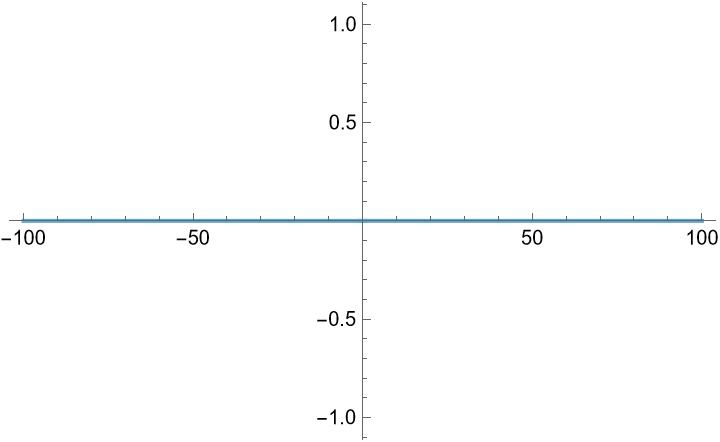
![res = ResourceFunction["PowerAffineExpand"][((x^2 - 1)/(x^2)), 1/2, x]](https://www.wolframcloud.com/obj/resourcesystem/images/810/810e59c4-98c8-4104-930c-5992aec79e9c/05b948b0d9385dc1.png)

![Plot[Chop[((x^2 - 1)/(x^2))^(1/2) - res], {x, -100, 100}]](https://www.wolframcloud.com/obj/resourcesystem/images/810/810e59c4-98c8-4104-930c-5992aec79e9c/19f5c4f0ad93ad71.png)
![ResourceFunction["PowerAffineExpand"][(x^3 - 3 x + 10), 1/2, x]](https://www.wolframcloud.com/obj/resourcesystem/images/810/810e59c4-98c8-4104-930c-5992aec79e9c/4e2a4509736e21ff.png)

![ResourceFunction["PowerAffineExpand"][(x^3 - 3 x + 10), 1/2, x] // ToRadicals](https://www.wolframcloud.com/obj/resourcesystem/images/810/810e59c4-98c8-4104-930c-5992aec79e9c/637483a7f448ab7e.png)

![ResourceFunction["PowerAffineExpand"][((x^6 - 3 x + 10)/(x - 2)), 1/2,
x]](https://www.wolframcloud.com/obj/resourcesystem/images/810/810e59c4-98c8-4104-930c-5992aec79e9c/4dbe049ccb2612fb.png)

![PowerExpand[(x (x^2 - 1))^(1/2)]](https://www.wolframcloud.com/obj/resourcesystem/images/810/810e59c4-98c8-4104-930c-5992aec79e9c/4dca164b8b25e852.png)

![PowerExpand[(x (x^2 - 1))^(1/2), Assumptions -> Element[x, Reals]]](https://www.wolframcloud.com/obj/resourcesystem/images/810/810e59c4-98c8-4104-930c-5992aec79e9c/730d83a50457caa7.png)

![ResourceFunction["PowerAffineExpand"][(x (x^2 - 1)), 1/2, x]](https://www.wolframcloud.com/obj/resourcesystem/images/810/810e59c4-98c8-4104-930c-5992aec79e9c/0a9504dcc5a51aae.png)

![PowerExpand[((x^2 - 1)/(x^4 + x^3 - 10))^(1/2)]](https://www.wolframcloud.com/obj/resourcesystem/images/810/810e59c4-98c8-4104-930c-5992aec79e9c/738d616fd7b9fec3.png)

![PowerExpand[((x^2 - 1)/(x^4 + x^3 - 10))^(1/2), Assumptions -> True]](https://www.wolframcloud.com/obj/resourcesystem/images/810/810e59c4-98c8-4104-930c-5992aec79e9c/143864eed573d14a.png)

![ResourceFunction["PowerAffineExpand"][((x^2 - 1)/(x^4 + x^3 - 10)), 1/2, x]](https://www.wolframcloud.com/obj/resourcesystem/images/810/810e59c4-98c8-4104-930c-5992aec79e9c/35f20eb2150a5839.png)

![ResourceFunction["PowerAffineExpand"][(k x^2 - 1), 1/2, x]](https://www.wolframcloud.com/obj/resourcesystem/images/810/810e59c4-98c8-4104-930c-5992aec79e9c/3b85b7de0c143e15.png)

![ResourceFunction["PowerAffineExpand"][(I x^2 - 1), 1/2, x]](https://www.wolframcloud.com/obj/resourcesystem/images/810/810e59c4-98c8-4104-930c-5992aec79e9c/353393aa846eb249.png)



![ResourceFunction["PowerAffineExpand"][(1 + 2 x + 2 x^2), 1/2, x] /. x -> -1 + I // N](https://www.wolframcloud.com/obj/resourcesystem/images/810/810e59c4-98c8-4104-930c-5992aec79e9c/7b4771066090020c.png)

![ResourceFunction["PowerAffineExpand"][(x^8 - 8 x^3 + 2 x^2 + 5 x - 1),
1/2, x]](https://www.wolframcloud.com/obj/resourcesystem/images/810/810e59c4-98c8-4104-930c-5992aec79e9c/614fc0bb91d6b081.png)
![ResourceFunction[
"PowerAffineExpand"][(Times @@ Table[1 - x/k, {k, 1, 6}]), 1/2, x]](https://www.wolframcloud.com/obj/resourcesystem/images/810/810e59c4-98c8-4104-930c-5992aec79e9c/24d56040765df188.png)

![ResourceFunction["PowerAffineExpand"][(x^2 + 2 x + 2), 1/3, x]](https://www.wolframcloud.com/obj/resourcesystem/images/810/810e59c4-98c8-4104-930c-5992aec79e9c/63d6b313d2416419.png)

![ResourceFunction["PowerAffineExpand"][((x^2 - 1)/(x - 1)), 1/2, x]](https://www.wolframcloud.com/obj/resourcesystem/images/810/810e59c4-98c8-4104-930c-5992aec79e9c/02146f283767947a.png)
